
Three of medicine’s most powerful imaging tools work through completely different physical principles, producing very different information about your body. Here is what each one does — and why it matters which you receive.
| Feature | X-Ray | CT Scan | MRI |
|---|---|---|---|
| Technology | Radiation | Rotating X-Ray + computer | Magnetic field + radio waves |
| Best for | Bones, lungs, chest | Chest, abdomen, trauma | Brain, spine, joints, soft tissue |
| Radiation | Low | Moderate | None |
| Scan time | Seconds | 5–15 minutes | 30–60 minutes |
| Soft tissue detail | Poor | Moderate | Excellent |
| Cost | $50–$200 | $200–$1,500 | $400–$3,500 |
X-Ray: The Foundation of Medical Imaging
Discovered in 1895, X-Rays remain the most widely used imaging tool globally. They work by passing radiation through the body — dense structures like bone absorb radiation and appear white, while air (lungs) allows radiation through and appears black. X-Rays are ideal for fracture diagnosis, pneumonia detection, scoliosis assessment, and cardiac silhouette evaluation. Their limitations are significant for soft tissues — muscles, tendons, brain, and most abdominal organs are poorly visualized.
CT Scan: The Cross-Sectional Revolution
Computed Tomography (CT) uses a rotating X-Ray source and detector to capture hundreds of cross-sectional images, which a computer reconstructs into detailed 3D representations. CT excels at abdominal and pelvic imaging, pulmonary embolism diagnosis, traumatic injury assessment, and vascular evaluation when contrast is administered. Its principal limitation is radiation exposure, making it less ideal for young patients or pregnant women.
MRI: The Soft Tissue Master
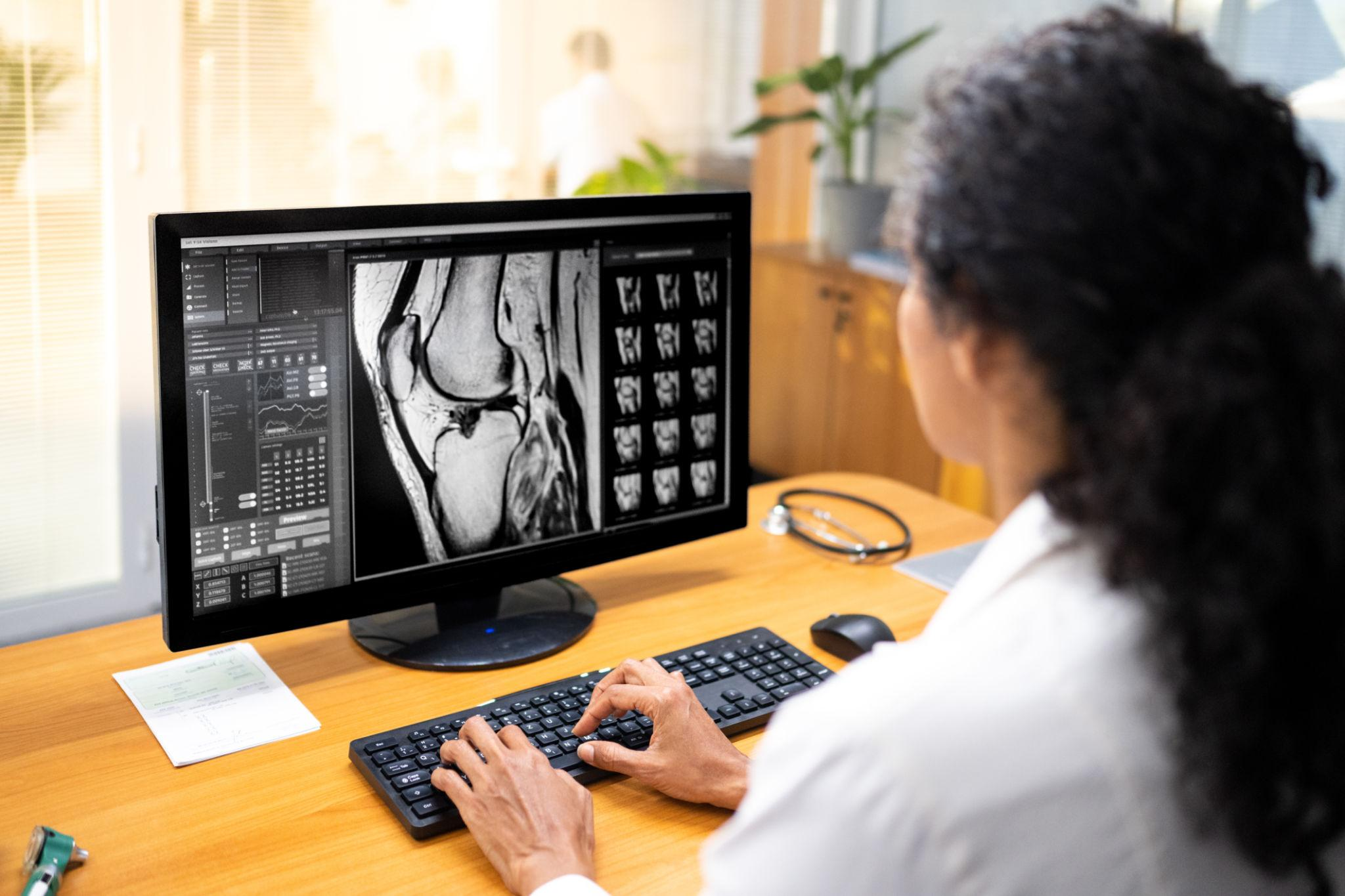
Magnetic Resonance Imaging uses powerful magnetic fields and radio waves to align hydrogen protons in your body and measure their relaxation — producing images with extraordinary soft tissue contrast. Brain tumors, spinal cord pathology, ligament and cartilage injuries, and inflammatory joint conditions are all imaged most accurately by MRI. Because MRI uses no ionizing radiation, it is the preferred modality for repeated imaging and for vulnerable populations.