A cancer diagnosis is among the most life-altering moments a person can experience. The imaging that informs that diagnosis, and the treatment that follows, deserves the highest standard of expert scrutiny available. Here is why radiology second opinions are especially critical in oncology.
The Oncological Radiology Stakes
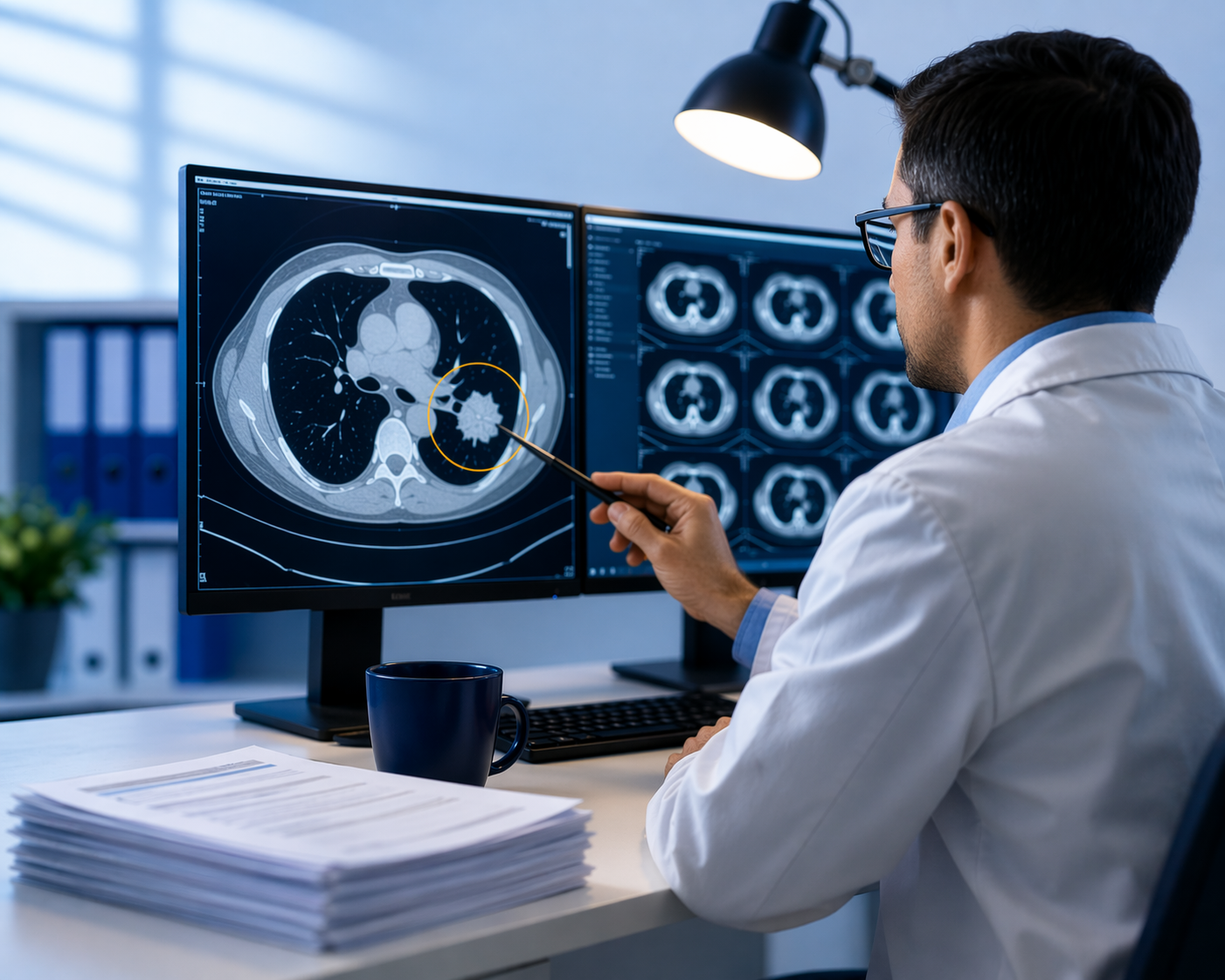
Cancer treatment is tightly calibrated to disease stage. A stage II colorectal cancer and a stage III colorectal cancer may receive fundamentally different treatment approaches — and staging is determined largely by imaging. An MRI that under-stages a rectal cancer by missing mesorectal fascia involvement may lead to inadequate surgical margins. A CT that over-stages lung cancer by mischaracterizing reactive lymph nodes as malignant may deny a patient curative resection they are eligible for.
Beyond staging, cancer diagnosis through imaging involves distinguishing malignant from benign lesions, characterizing tumor type, and identifying metastatic disease — all of which carry enormous treatment implications. These are precisely the interpretive tasks where subspecialty expertise most significantly outperforms general radiology.
The Statistics on Oncological Radiology Discrepancy
In studies of patients referred for oncological second opinions at major cancer centres, clinically significant imaging discrepancies have been reported in 20–40% of cases. A study of breast cancer cases found that independent radiology review changed management in 37% of patients — a finding that has been replicated across multiple tumour types and imaging modalities.
37%
of breast cancer patients had management changed following independent radiology second opinion review
Before Treatment Begins: The Critical Window
The period between receiving a cancer diagnosis and beginning treatment is the optimal window for radiology second opinion. Once chemotherapy, radiation, or surgery has begun, imaging findings are influenced by treatment effects — creating artifacts and changes that complicate subsequent interpretation. An independent pre-treatment review provides the clearest possible baseline assessment of disease extent and characteristics.
What a Cancer-Focused Radiology Second Opinion Covers
- Staging accuracy: Verification of tumour size, local invasion, lymph node involvement, and distant metastasis characterization
- Lesion characterization: Expert assessment of imaging features that suggest benign vs. malignant behaviour, including enhancement patterns, margin characteristics, and signal/density profiles.
- Response assessment: For patients already on treatment, expert review of post-treatment imaging to determine response — including distinction of pseudoprogression from true progression.
- Treatment planning support: Identification of anatomical relationships critical for surgical planning or radiation field delineation.
How to Proceed
If you or someone you care for has received a cancer diagnosis based on imaging, a Radeterno expert review can be initiated within hours of your original report. Submit your imaging files and written report via email or the website. A certified radiologist with oncological imaging expertise will review your case and produce an independent annotated report within 24–48 hours — providing the independent expert perspective that every cancer patient deserves before treatment begins.